
Mental stimulation for dogs and cats is an important part of keeping our pets happy and fulfilled. When we think about keeping pets healthy, physical exercise usually comes to mind first. Walks, playtime and opportunities to move are certainly important—but our pets need opportunities to exercise their brains, too.
When we think about keeping our pets healthy, physical exercise usually comes to mind first. Walks, playtime and opportunities to move are certainly important—but our pets need opportunities to exercise their brains, too.
Mental stimulation for dogs and cats gives pets opportunities to think, problem-solve and engage in behaviors that come naturally to them. And enrichment doesn’t have to mean expensive puzzle toys or elaborate activities. Some of the best forms of mental stimulation are surprisingly simple.
Why Mental Stimulation for Dogs and Cats Matters
Dogs and cats weren’t designed to spend their entire day eating from a bowl and sleeping on the couch. Their natural behaviors include exploring, sniffing, searching, hunting, chewing, scratching, climbing and working to obtain resources.
Our pets may live very different lives from their ancestors, but those behavioral needs haven’t disappeared.
Providing appropriate outlets for these behaviors can help make everyday life more interesting and fulfilling.
Mental stimulation can:
- Provide an outlet for natural behaviors
- Help prevent boredom
- Encourage problem-solving and confidence
- Add variety to a pet’s daily routine
- Provide appropriate ways to use physical and mental energy
- Support overall quality of life
And while enrichment is often associated with young, energetic animals, pets of virtually any age can benefit when activities are adapted to their individual abilities.
Mental Exercise Can Be Tiring, Too
Ever notice how tired your dog seems after spending time sniffing somewhere new?
That’s because your dog wasn’t just walking.
They were gathering and processing an incredible amount of information about their environment.
Similarly, a cat stalking a toy, searching for hidden treats or figuring out a food puzzle is doing more than playing. They’re using their brain and engaging behaviors that come naturally to them.
This is one reason a longer or faster walk isn’t always the answer when you’re trying to meet a dog’s needs. Sometimes slowing down and allowing your dog to investigate the world can be incredibly valuable.
Let Your Dog Sniff
One of the easiest ways to provide mental stimulation for dogs requires absolutely no special equipment: let them use their nose.
Dogs experience much of their world through scent. Instead of measuring every walk by distance traveled, give your dog opportunities to stop and investigate.
Try occasionally taking a relaxed “sniffari” where your dog gets more choice about where to explore and how long to sniff.

You can also bring scent-based activities indoors. Scatter kibble or treats around a room, hide treats in cardboard boxes or roll food into a towel and let your dog search for it.
Simple activities can provide plenty of mental work.
Give Cats Opportunities to Hunt and Forage
Mental stimulation is just as important for cats.
Cats are natural hunters, and indoor cats don’t always have many opportunities to move through the hunt sequence of searching, stalking, chasing and capturing.
Interactive wand toys can provide an appropriate outlet for these behaviors. Move the toy like prey rather than simply waving it in your cat’s face – let it hide, dart away and occasionally be “caught.”
Food can also become enrichment.
Instead of serving every meal in a bowl, try placing portions of food in puzzle feeders, hiding small amounts around the home or using toys designed to release kibble as your cat interacts with them.
Even a cardboard box or paper bag – with handles removed for safety – can become an opportunity to explore.
Licking, Chewing and Shredding Count, Too
Enrichment doesn’t always need to involve complicated puzzles.
For dogs, activities involving licking, chewing and shredding can provide appropriate outlets for natural behaviors.
Depending on the individual pet, options might include:
- Stuffed and frozen food toys
- Lick mats
- Safe, appropriate chews
- Snuffle mats
- Treat searches
- Cardboard boxes filled with paper and hidden treats
- Simple food puzzles
Always choose activities appropriate for your pet and supervise when necessary, particularly when using cardboard, fabric or anything your pet might swallow.
Cats may enjoy scratching surfaces, cardboard, cat-safe grasses, climbing opportunities and toys they can chase, bat or “capture.”
The goal isn’t to keep your pet entertained every second of the day. It’s to give them opportunities to engage in behaviors that matter to them.
Mental Stimulation for Dogs and Cats Doesn’t Have to Be Complicated
One of the biggest misconceptions about enrichment is that you need to constantly buy new toys.
You don’t.
Providing mental stimulation for dogs and cats doesn’t have to be complicated or expensive.
In fact, many enrichment activities can be created with things you already have at home.
Try tossing a handful of kibble across the floor instead of putting it in a bowl. Hide treats around the house. Put treats inside an empty cardboard box. Practice a few simple training skills. Let your dog spend an extra five minutes sniffing the same patch of grass if that’s what interests them.
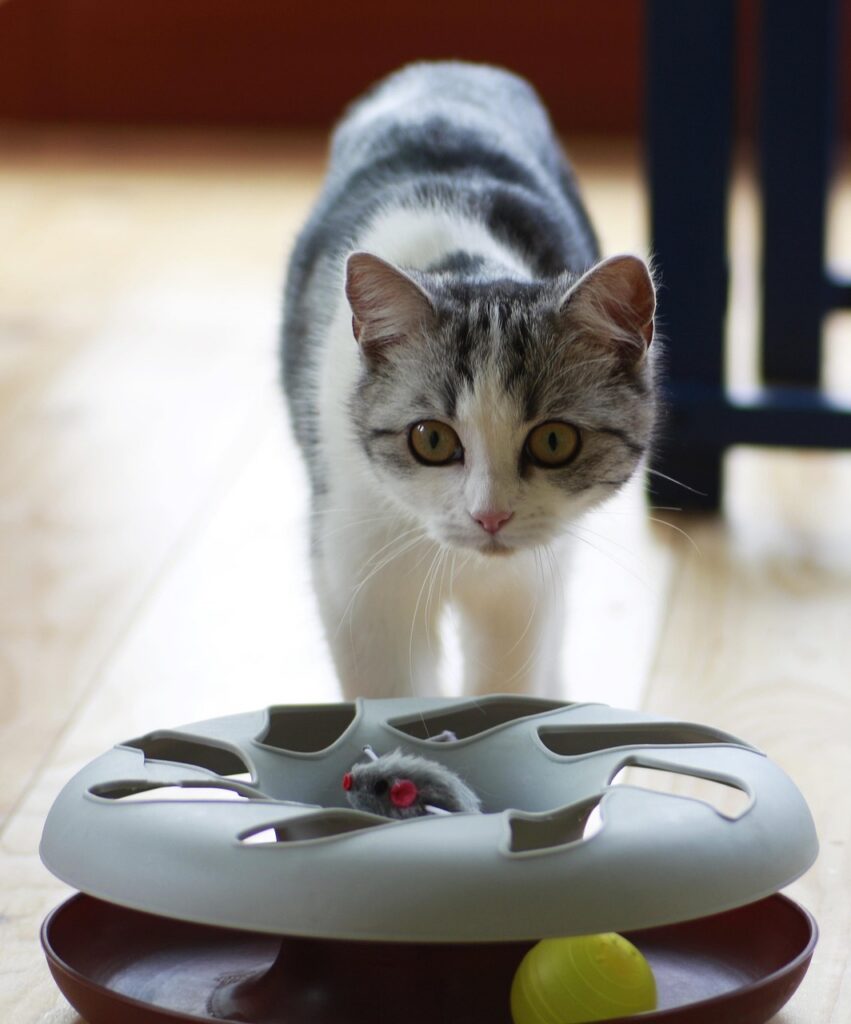
For cats, rotate toys rather than leaving everything available all the time. Offer boxes or paper for exploration. Move a wand toy like prey. Place treats somewhere your cat needs to search for them.
Sometimes the simplest activities are the most engaging.
Every Pet Is Different
Enrichment should always be tailored to the individual animal.
One dog may happily tear apart a cardboard box while another immediately tries to eat the cardboard. One cat may enthusiastically tackle a food puzzle while another becomes frustrated and walks away.
Age, mobility, health, confidence, food motivation and individual preferences all matter.
Start easy and let your pet succeed. If an activity seems frustrating rather than enjoyable, make it simpler or try something different.
And remember: enrichment should offer choice, not pressure. Your pet should always have the option to participate—or not.
Enrichment Can Be Part of Everyday Pet Care
Mental stimulation doesn’t need to be another chore on your to-do list. Small changes to everyday routines can make a meaningful difference.
At Comfort Zone Critter Care, enrichment is naturally incorporated into the way we care for pets. A dog walk may include plenty of time to sniff and explore rather than focusing solely on distance. Pet-sitting visits can include play, treat searches, food puzzles or other activities based on what an individual pet enjoys.
Because caring for pets isn’t only about meeting their physical needs. Giving them appropriate opportunities to sniff, forage, explore, play and problem-solve helps make their world a little richer, too.