
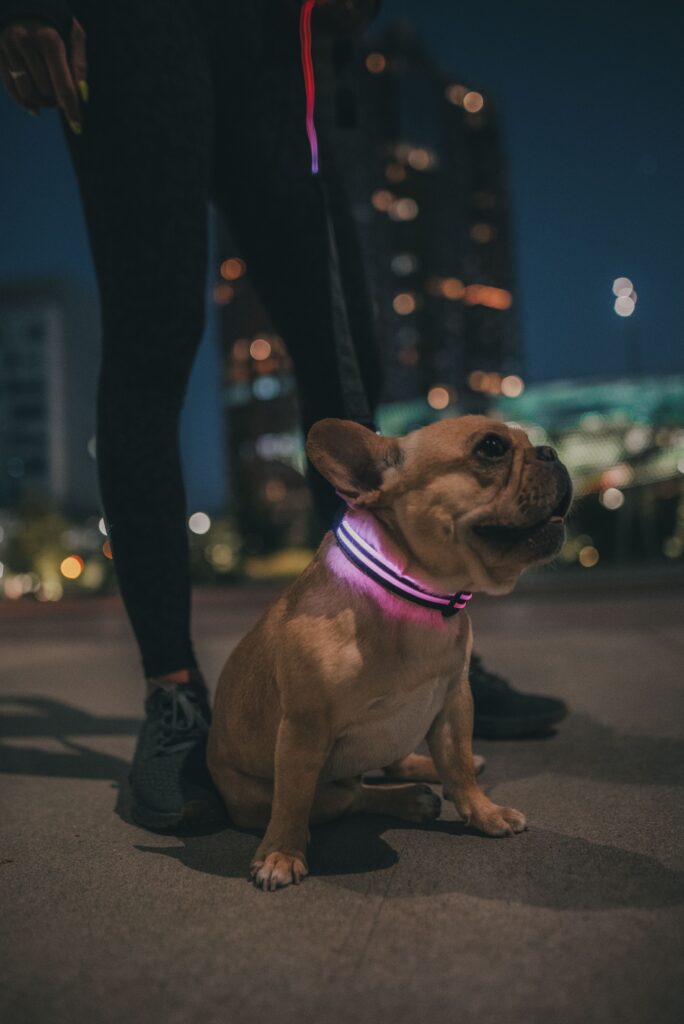
As autumn settles into Western New York, shorter days mean more walks in low-light conditions. Dog walking safety after dark becomes especially important as daylight hours shrink and familiar neighborhoods become harder to navigate. Whether you’re heading out for an evening stroll or a quick potty break, a few simple precautions can help keep you and your dog safe.
With Daylight Saving Time ending soon, those after-work walks that once happened in daylight may suddenly take place in near darkness.
While evening walks can still be enjoyable for dogs and their humans, reduced visibility brings additional safety concerns. Fortunately, a few simple precautions can help keep everyone safer.
1. Dog Walking Safety After Dark Starts With Visibility
One of the easiest ways to improve your dog’s visibility is by adding reflective or illuminated accessories to their walking gear.
Consider using:
- Reflective harnesses and collars: Help your dog stand out when headlights or other light sources hit them.
- LED collar lights: Make your dog easier to spot, especially in areas with limited street lighting.
- Reflective leashes: Add another layer of visibility between you and your dog.
- Reflective clothing for yourself: Your visibility matters just as much as your dog’s!
Remember, reflective materials need an external light source to work. LED accessories provide their own illumination, making them particularly helpful on darker streets.
Just be sure any accessories fit comfortably and don’t interfere with your dog’s movement.
2. Stick to Familiar, Well-Lit Routes
Darkness can make even familiar neighborhoods feel different.
Shadows, unfamiliar sounds, approaching vehicles, and reduced visibility may make some dogs more cautious or uncomfortable during evening walks.
Whenever possible, choose routes with sidewalks, streetlights, and predictable traffic patterns.
Avoid poorly lit areas, busy intersections without safe crossings, and places where uneven pavement or other hazards may be difficult to see.
For dogs who are sensitive to their surroundings, sticking to familiar routes can also help them feel more comfortable.
One of the most important aspects of dog walking safety after dark is staying aware of what’s happening around you.
3. Stay Alert to Your Surroundings
When walking after dark, awareness becomes especially important.
Keep your phone tucked away, pay attention to approaching vehicles, and watch for cyclists, pedestrians, and wildlife.
Never assume a driver can see you or your dog, even if you’re wearing reflective gear.
When crossing streets, use designated crosswalks whenever possible and allow plenty of time to cross safely.
And while retractable leashes may seem convenient, a standard fixed-length leash generally offers better control in areas with traffic or limited visibility.
4. Don’t Forget About Wildlife
Fall evenings can bring increased wildlife activity throughout Western New York.
Deer, skunks, raccoons, and other animals may be more active around dusk and after dark.
Dogs often notice wildlife long before we do, especially when their noses pick up an interesting scent!
Keep your dog on leash, scan the area ahead, and give wildlife plenty of space.
Avoid allowing your dog to investigate dark bushes, wooded edges, or areas where an animal may be hiding.
Giving wildlife room to move away protects both your dog and the animals sharing our neighborhoods.
5. Let Your Dog Sniff!
Just because it’s getting darker doesn’t mean your dog needs to rush through their walk.
Sniffing is an important form of enrichment that allows dogs to explore their environment, gather information, and engage in natural behaviors.
Even a shorter walk with plenty of opportunities to sniff can provide a meaningful experience.
If your dog seems hesitant or uncomfortable walking after dark, there’s no need to force a longer outing.
A shorter, familiar route followed by an indoor enrichment activity may be a better choice.
Remember, a successful dog walk isn’t measured by distance. It’s measured by how well it meets your dog’s individual needs.
6. Know When to Head Indoors
Visibility isn’t the only consideration during autumn and winter evenings.
Rain, strong winds, icy sidewalks, and dropping temperatures can make outdoor walks uncomfortable or unsafe.
Pay attention to your dog’s body language. Hesitation, trembling, repeatedly lifting paws, or trying to head home may indicate that your dog isn’t comfortable.
Some dogs enjoy chilly evening adventures, while others would much rather head inside for a cozy enrichment activity.
And that’s perfectly okay!
Your dog’s physical and emotional well-being should always come first.
Safe, Enriching Dog Walks in Lancaster, NY
At Comfort Zone Critter Care, dog walking is about so much more than getting from point A to point B.
As a Fear Free Certified Professional and Certified Professional Dog Trainer, I prioritize each dog’s comfort, safety, and individual needs.
Whether that means taking a leisurely sniff-filled stroll, choosing a quieter route, or adjusting a walk because of weather or environmental concerns, my goal is to make every visit a positive experience.
As the days get shorter, having a trusted professional dog walker can help ensure your dog continues receiving individualized attention and enrichment while you’re at work or away from home.
Prioritizing dog walking safety after dark doesn’t mean sacrificing enrichment or enjoyment. With a little preparation, evening walks can still be a positive experience for your dog.
Looking for professional dog walking services in Lancaster, NY?
Visit Comfort Zone Critter Care to learn more about my dog walking and pet care services.
Because every dog deserves to feel safe, comfortable, and understood—no matter what time the sun sets. 🐾
