
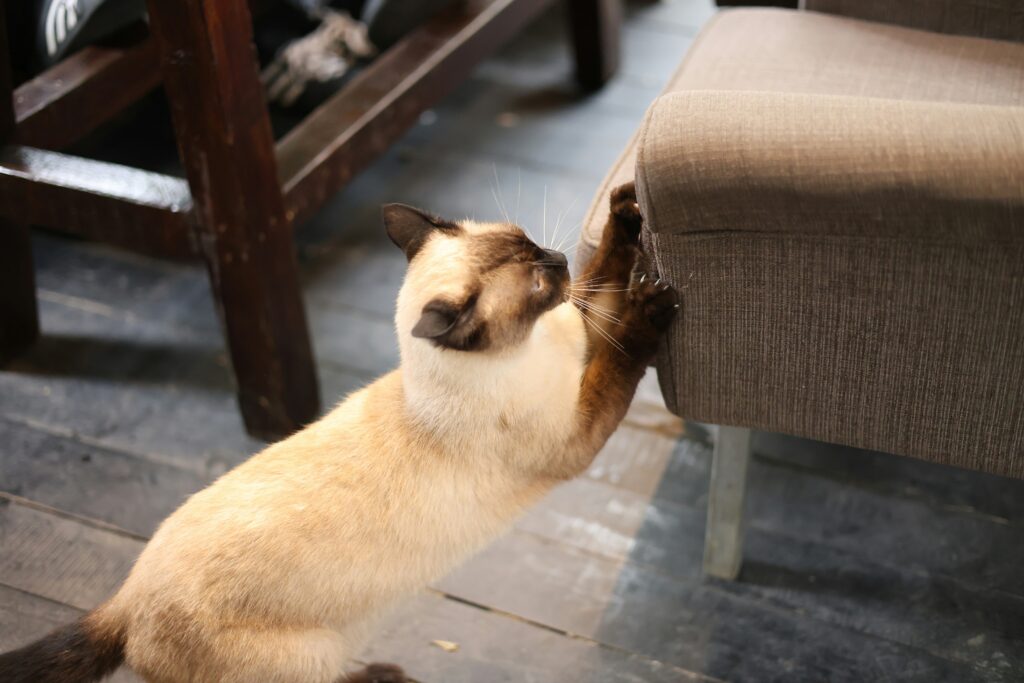
If you’re trying to stop your cat from scratching furniture, you’re not alone. Scratching couches, chairs, and carpets is one of the most common frustrations cat owners face.
Torn couch corners, shredded chair arms, and damaged carpets can make it feel like your cat is being destructive on purpose.
The truth is: cats don’t scratch furniture to be “bad.”
Scratching is a completely natural and necessary behavior. The key isn’t stopping the behavior — it’s redirecting it to appropriate outlets.
Veterinary experts from the American Association of Feline Practitioners explain that scratching is a normal feline behavior that helps cats maintain their claws, stretch their muscles, and mark territory.
Here’s how to stop your cat from scratching furniture humanely and effectively.
Why Cats Scratch Furniture
Before solving the problem, it helps to understand why cats scratch furniture.
According to the American Society for the Prevention of Cruelty to Animals, scratching helps cats maintain their claws, stretch their muscles, and mark territory.
Scratching serves several important purposes for cats:
- Claw maintenance
- Scratching removes the outer sheath of the claw, helping keep claws healthy.
- Territory marking
- Cats have scent glands in their paws. Scratching leaves both a visual mark and a scent signal.
- Stretching and muscle exercise
- Scratching allows cats to stretch their spine, shoulders, and legs.
- Stress relief
- Scratching can help cats release energy or regulate emotions.
If your cat is scratching the couch, they’re not being stubborn. They’re simply choosing a surface that feels good to scratch.
How to Stop Your Cat Scratching Furniture
One of the most common complaints cat owners have is cats scratching furniture. Couch and chair arms and corners are especially tempting because the fabric provides the perfect texture for scratching.
To stop your cat from scratching furniture, try these simple steps:
Place a scratching post next to the couch
Cats often scratch furniture because it’s conveniently located. Placing a sturdy scratching post right next to the couch gives your cat a better option.
Use furniture protection temporarily
Double-sided furniture tape, couch guards, or slipcovers can make the couch less appealing while your cat learns to use their scratching post instead.
Reward your cat for using the scratching post
When your cat chooses the scratching post instead of the couch, reward them with praise, treats, or play. This helps reinforce the behavior you want.
With a little patience and the right setup, most cats quickly learn that the scratching post is the better place to scratch.
Provide Better Scratching Options
The most important step is giving your cat scratching surfaces that are more appealing than your furniture.
Not all scratching posts are created equal.
Look for posts that are:
- Tall enough for your cat to fully stretch
- Stable so they don’t wobble or fall
- Made from materials cats enjoy, like sisal, cardboard, or natural wood
Many cats prefer vertical posts, but some prefer horizontal scratchers. Offering both gives your cat choices.
Place scratching posts in areas where your cat already likes to scratch.
Place Scratching Posts Strategically
The most effective way to stop cat scratching furniture is to give your cat better scratching options that meet their natural needs.
Location matters just as much as the scratching post itself.
Cats often scratch in areas that are:
- Near sleeping spots
- Close to their humans
- In high-traffic parts of the home
- Near furniture they already scratch
If your cat scratches the couch or chair arm, place a scratching post right next to that spot.
Once they start using the post consistently, you can slowly move it to a more convenient location.
Make Furniture Less Appealing to Scratch
While encouraging appropriate scratching, you can also make furniture less rewarding for scratching.
Some simple solutions include:
- Double-sided furniture tape
- Furniture guards
- Slipcovers or blankets
- Temporary aluminum foil on problem areas
These methods don’t punish your cat. They simply make the furniture less satisfying to scratch.
Using humane training methods that reduce fear and stress — principles supported by programs like Fear Free Pets — helps cats feel safe while learning new habits.
Reward the Behavior You Want
Cats learn through positive reinforcement.
When your cat uses a scratching post:
- Offer a treat
- Give gentle praise
- Engage in play nearby
You can also sprinkle a little catnip on the scratching post to make it more enticing.
The goal is to help your cat learn:
“Scratching here is awesome.”
Trim Your Cat’s Nails Regularly
Keeping your cat’s nails trimmed can reduce the damage caused by scratching.
Most cats benefit from nail trims every 2–4 weeks.
If your cat is uncomfortable with nail trims, start slowly by:
- Handling their paws briefly
- Rewarding calm behavior
- Introducing nail trims gradually
What NOT to Do to Stop Your Cat Scratching Furniture
Some common solutions can actually make scratching problems worse.
The Humane Society of the United States explains that declawing is a surgical procedure that removes part of the cat’s toe and can lead to long-term behavioral and medical problems.
Avoid:
- Punishing your cat
- Punishment can cause fear and anxiety without teaching the correct behavior.
- Declawing
- Declawing is a surgical amputation of the last bone of each toe and can lead to long-term behavioral and medical problems.
- Spraying your cat with water
This may stop scratching in the moment, but it can damage trust.
Instead, focus on redirecting the behavior and making appropriate scratching outlets irresistible.
Scratching Is Normal Cat Behavior
It’s important to remember that scratching is not a problem behavior – it’s a normal feline need.
Scratching is a normal feline behavior and an important form of communication, as explained by International Cat Care.
With the right scratching posts, placement, and positive reinforcement, most cats quickly learn where to scratch — helping you stop cat scratching furniture without punishment.
Professional Cat Sitting in Lancaster, NY
When you travel, your cat deserves care that understands their natural behaviors and emotional needs.
At Comfort Zone Critter Care, I provide Fear-Free, personalized pet sitting designed to keep cats comfortable in their own homes.
Visits include:
- Feeding and fresh water
- Litter box care
- Play and enrichment
- Medication administration when needed
- Lots of calm, gentle attention
If you’re in Lancaster, NY, professional pet sitting can also help reduce stress-related behaviors by keeping cats comfortable in their own environment.
📍 Serving Lancaster, NY and select nearby areas
If you’re looking for a trusted cat sitter in Lancaster, NY, you can learn more about my services here: Lancaster Pet Sitting and Dog Walking Services