
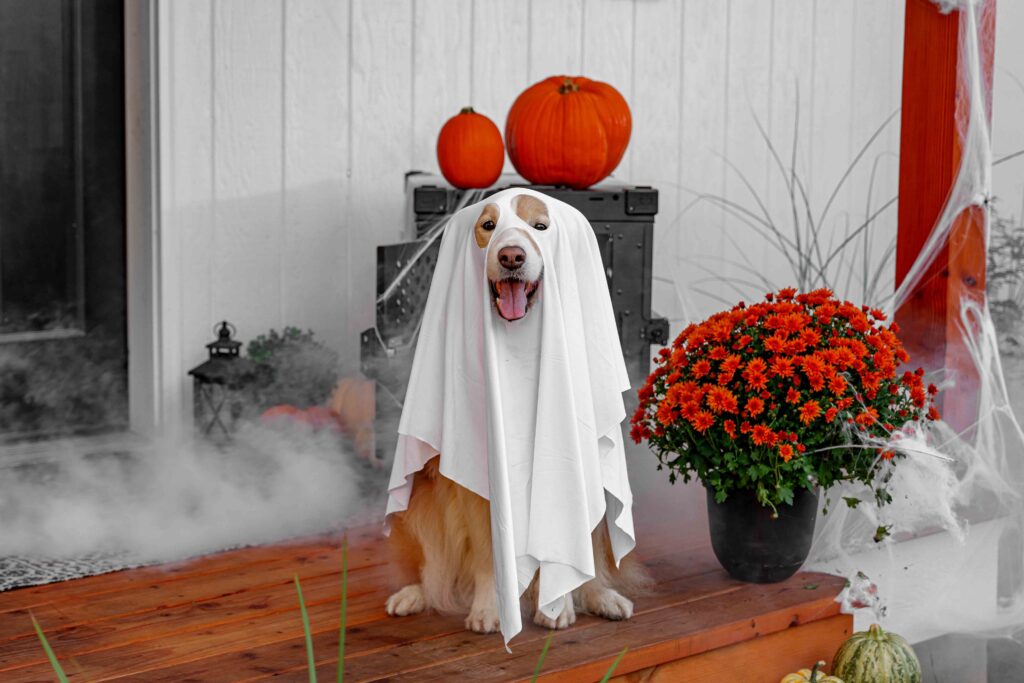
Halloween can be a lot of fun for people, but our pets may have a very different opinion about the costumes, decorations, doorbells, unfamiliar visitors, and changes to their normal routine.
Even pets who are usually social and easygoing can become overwhelmed by all the extra activity. And for shy, anxious, or noise-sensitive pets, Halloween night can be especially stressful.
A little preparation can go a long way toward keeping your pets safe and comfortable. These Halloween safety tips for pets can help dogs, cats, and other companion animals enjoy a happier, less stressful holiday.
Create a Safe, Quiet Space
One of the best things you can do for your pet on Halloween is give them the option to get away from the activity.
If your dog becomes excited or worried when someone comes to the door, repeatedly ringing doorbells and groups of costumed strangers can quickly become overwhelming. Cats may also become frightened by unfamiliar voices, noises, and increased activity around the house.
Set up a comfortable space away from the front door before trick-or-treating begins. Depending on your pet, this might include:
- Their favorite bed or blanket
- A stuffed food toy or other favorite enrichment activity
- Soft music or white noise
- Familiar toys
- Access to a favorite hiding or resting spot
- Closed curtains or blinds to reduce visual stimulation
Most importantly, allow your pet to choose where they feel comfortable. Halloween isn’t the night to encourage a nervous pet to interact with visitors.
Prevent Door-Dashing and Escapes
With the front door opening and closing throughout the evening, Halloween can create extra opportunities for pets to slip outside.
Consider keeping dogs and cats behind a closed door, baby gate, exercise pen, or another secure barrier while trick-or-treaters are arriving.
Even a pet who normally stays close to home could become frightened by costumes, shouting children, or unexpected noises and run farther than expected.
Make sure your pet’s identification tags and microchip information are current, too. Hopefully you’ll never need them, but updated identification provides an extra layer of protection if your pet does get loose.
Keep Halloween Candy Out of Reach
The candy bowl may be irresistible to pets, but several common Halloween treats can cause serious problems.
Chocolate can be toxic to dogs and cats, and some sugar-free candies and gums contain xylitol, which is extremely dangerous for dogs. Raisins can also be toxic.
Don’t forget about the wrappers. Foil, plastic, lollipop sticks, and other packaging can become choking hazards or cause intestinal blockages if swallowed.
Keep candy in a location your pets cannot access, and remind children not to share their Halloween treats with four-legged family members.
If you suspect your pet has eaten something potentially toxic, contact your veterinarian or a pet poison control service promptly.
Be Careful With Decorations
Halloween decorations can introduce some unexpected hazards.
Candles and jack-o’-lanterns with open flames can be knocked over by curious cats or enthusiastic tails. Battery-operated candles are generally a safer alternative, although batteries should still be kept where pets can’t chew or swallow them.
Electrical cords, string lights, fake cobwebs, small decorations, and dangling objects can also be tempting—especially for curious cats and puppies.
When decorating, take a look around from your pet’s perspective. If something looks chewable, climbable, swattable, or edible, there’s a good chance your pet has noticed it too.
Think About Your Pet Before Choosing a Costume
Pet costumes can make adorable photos, but not every pet enjoys wearing one—and that’s perfectly okay.
If you’d like your pet to wear a costume, pay attention to their body language. Signs such as freezing, trying to remove the costume, hiding, avoiding you, excessive panting, pinned ears, or repeatedly licking their lips may indicate that they’re uncomfortable.
A pet who enjoys dressing up should still have a costume that:
- Allows normal movement
- Doesn’t interfere with breathing, hearing, vision, or toileting
- Doesn’t contain small pieces that could be chewed off or swallowed
- Fits comfortably without being restrictive
- Can be removed easily
Never force a pet to remain in a costume if they’re uncomfortable.
Sometimes a festive bandana or Halloween-themed collar is more than enough!
Keep Glow Sticks Away From Pets
Glow sticks and glow jewelry are popular on Halloween night, but they can be tempting toys for cats and dogs.
The liquid inside is generally considered low in toxicity, but it has an extremely bitter taste and can cause drooling, pawing at the mouth, agitation, and gastrointestinal upset if a pet bites into one.
Keep glow sticks and similar items out of reach and provide your pets with their own safe toys instead.
Halloween Safety Tips for Pets: Plan Dog Walks Early
If possible, plan your dog’s walk earlier in the day before costumes, crowds, and trick-or-treaters fill the neighborhood.
A familiar sniff-filled walk can provide physical activity and enrichment without putting your dog in the middle of a busy Halloween environment.
For dogs who are nervous around strangers, children, unusual clothing, or sudden noises, skipping the evening Halloween walk altogether may be the kinder choice.
One of the simplest Halloween safety tips for pets is remembering that they don’t need to participate in every human celebration.
Keep Cats Indoors
Cats who normally spend time outdoors should be kept safely inside on Halloween.
Increased traffic, groups of people walking through neighborhoods, loud noises, and unfamiliar activity can make the outdoors more unpredictable than usual.
Give your cat plenty of comfortable indoor options instead—cozy hiding places, window perches away from the busiest areas, playtime, or a favorite enrichment activity.
And if your cat chooses to hide for the evening, let them. Hiding is a perfectly normal way for cats to create distance from something they find stressful.
Don’t Forget About Other Pets
Halloween safety isn’t just for dogs and cats.
Rabbits, guinea pigs, birds, reptiles, and other companion animals can also be affected by unusual noise and activity in the home.
Keep their enclosures away from the busiest areas when possible, supervise children around them, and make sure decorations, candy, cords, and other Halloween items can’t fall into or be pulled inside their habitat.
Maintaining their normal routine as much as possible can also help reduce unnecessary stress.
Watch Your Pet’s Body Language
One of the most important things you can do on Halloween—or any day—is pay attention to what your pet is communicating.
Stress doesn’t always look dramatic. A dog who suddenly becomes very still, repeatedly yawns, pants when they aren’t hot, avoids interaction, or tries to move away may be telling you they’ve had enough.
Cats may hide, crouch, flatten their ears, swish their tails, avoid food, or become less social.
Instead of waiting for your pet to become completely overwhelmed, respond to those early signs by creating more distance from whatever is bothering them.
Giving a pet the ability to opt out isn’t spoiling them. It’s respecting what they’re communicating.
Halloween Safety Tips for Pets Start With Their Individual Needs
Your pet doesn’t need to greet trick-or-treaters, wear a costume, attend a Halloween event, or be part of every activity to enjoy the holiday with you.
For some pets, the perfect Halloween is a long sniffy walk in the afternoon followed by a stuffed Kong and a nap in a quiet bedroom. For others, it might mean curling up on the couch with their favorite person while the festivities happen outside.
The goal isn’t to make our pets enjoy Halloween the way we do. It’s to help them feel safe and comfortable while we enjoy it.
If you’re planning Halloween festivities or traveling this fall and need professional pet care in Lancaster, NY, Comfort Zone Critter Care provides personalized in-home pet sitting and dog walking designed around your pet’s individual needs and routine.